Cognitive Warfare

Author: Prof. Eng. Carlos Serna II PE MS LSSBB
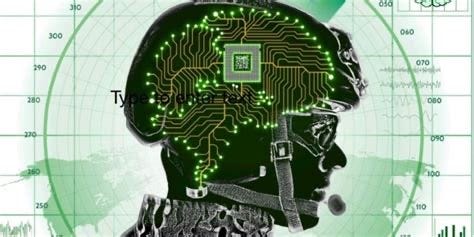
Cognitive warfare is an emerging concept in strategic studies and global security that refers to the use of psychological, technological, and informational manipulation techniques to influence the perception, thinking, and decision-making of individuals, groups, or entire societies. Its goal is to alter how people interpret reality, creating divisions, distrust, or even behavioral changes without the need for conventional military force.
1. Definition and Origins. Cognitive warfare is an evolution of information warfare and psychological warfare, but it goes further by focusing on the human mind as the primary battlefield. While information warfare aims to control the availability and accuracy of data, cognitive warfare targets how people process that data and make decisions. This concept has been explored by various security and defense agencies, including NATO, which defines it as “the ability to influence how people think and act by altering their cognitive processes through manipulation of the informational environment” (NATO Innovation Hub, 2021).
2. Main Characteristics of Cognitive Warfare
• Influence on perception: Uses information manipulation techniques to alter the perceived reality of the target audience.
• Use of advanced technologies: Relies on artificial intelligence, big data, and social media to segment and direct disinformation or persuasion campaigns.
• Focus on human psychology: Exploits cognitive biases, emotions, and psychological mechanisms to generate specific reactions.
• Impact on behavior: Aims not only to change opinions but also to induce concrete actions, such as protests, institutional distrust, or political shifts.
3. Methods Used in Cognitive Warfare
3.1. Information Manipulation
• Fake news and deepfakes: Creation of false content to confuse or influence audiences.
• Polarizing narratives: Exploitation of social, political, or cultural divisions to generate internal conflict.
3.2. Attacks on Trust
• Delegitimization of institutions: Encouraging distrust in governments, media, scientists, or experts.
• Spreading conspiracy theories: Creating uncertainty about key events to undermine the credibility of official sources.
3.3. Intervention in Cognitive Processes
• Use of recommendation algorithms: Social media and search engines reinforce certain biases and isolate individuals in information bubbles.
• Neuroscience applied to persuasion: Using brain studies to refine influence techniques.
3.4. Emotional Manipulation
• Exploitation of fear and anger: Generating intense emotional responses to shape public opinion.
• Personalized attacks: Targeting specific groups or individuals to alter their beliefs or attitudes.
4. Examples of Cognitive Warfare in Modern Times
• Election interference: The 2016 Russian meddling in U.S. elections demonstrated how social media campaigns can influence public opinion and polarize societies.
• Disinformation during the COVID-19 pandemic: The spread of false theories about COVID-19 and vaccines is a clear example of how information manipulation can alter collective behavior.
• Hybrid conflicts: State and non-state actors have used cognitive warfare tactics in conflicts like the war in Ukraine, where information has become a strategic weapon.
5. Consequences and Risks of Cognitive Warfare
• Erosion of truth and objectivity: The proliferation of manipulated information makes it harder for societies to distinguish reality from fiction.
• Radicalization and social fragmentation: Extreme polarization can lead to internal conflicts and weaken national cohesion.
• Distrust in science and authority: Cognitive manipulation can discredit scientific knowledge and promote irrational or dangerous attitudes.
6. Strategies to Counter Cognitive Warfare
6.1. Education and Media Literacy. Teaching individuals to recognize biases, verify sources, and develop critical thinking.
6.2. Regulation of Digital Platforms. Implementing policies to curb the spread of manipulated content and improve algorithmic transparency.
6.3. Strengthening Social Resilience. Creating rapid-response mechanisms against disinformation campaigns and fostering social cohesion.
6.4. Neuroscience and Cognitive Security Research. Developing tools to understand and mitigate the effects of mass psychological manipulation.
7. The Impact of Neuroscience on Cognitive Warfare. Neuroscience has revolutionized our understanding of how the human mind processes information, emotions, and decisions. In cognitive warfare, this discipline has been leveraged to develop more sophisticated manipulation strategies, allowing influence over perception, behavior, and decision-making at unprecedented levels.
7.1. Applications of Neuroscience in Cognitive Warfare
7.1.1. Understanding and Exploiting Cognitive Biases. Neuroscience has helped identify cognitive biases that affect decision-making, making perception manipulation easier. Some key examples include:
• Confirmation bias: People accept information that reinforces their preexisting beliefs and reject contradictory data. Disinformation campaigns use this bias to reinforce specific narratives.
• Availability bias: We give more importance to recent or striking information. Cognitive warfare exploits this by using sensationalist and repetitive news to influence public opinion.
• Halo effect: Perceptions of a source as trustworthy or untrustworthy can distort objective evaluation of its message. Manipulation campaigns seek to discredit legitimate sources to control the narrative.
7.1.2. Neuromodulation and Influence on Decision-Making. Neuroscience has shown that decision-making is influenced by neurotransmitters such as dopamine, cortisol, and oxytocin. Cognitive warfare strategies can exploit these mechanisms through:
• Fear and stress generation: Repeated exposure to alarming information increases cortisol levels, reducing critical thinking and leading to impulsive decision-making.
• Dopamine-driven rewards: Content designed to generate pleasure or outrage (viral memes, emotional news) activates brain reward circuits, reinforcing adherence to certain ideologies.
• Manipulation of trust through oxytocin: Creating emotional bonds with certain figures or groups makes people more receptive to their information.
7.1.3. Neurotechnology and Brain Stimulation. Advances in neurotechnology have led to tools that could be applied in cognitive warfare:
• Brain-computer interfaces (BCI): Though still in development, these technologies enable direct connections between the brain and external devices, raising risks of cognitive manipulation.
• Transcranial stimulation: Research has explored how electrical or magnetic brain stimulation can modulate behavior and perception.
• Artificial intelligence and predictive models: AI-based analysis of neural patterns allows prediction of human reactions and optimization of persuasion strategies.
7.2. Examples of Neuroscience Use in Conflicts and Social Manipulation
7.2.1. Disinformation Campaigns Based on Cognitive Psychology. A key example was the interference in the 2016 U.S. elections, where neuroscience-based strategies segmented the population and delivered personalized messages to maximize psychological impact.
7.2.2. Cognitive Manipulation Programs in the Military. Research has been conducted to enhance soldiers’ mental resilience through neurofeedback and brain stimulation techniques. This raises the possibility that similar methods could be used to weaken enemy morale and judgment.
7.2.3. Exploitation of Stress and Information Overload. Constant exposure to information, cognitive overload, and emotional manipulation have become key tools in hybrid conflicts like the war in Ukraine, where both sides use information warfare to influence public morale.
7.3. Ethical Implications and Dangers of Neuro-Warfare. The use of neuroscience in cognitive warfare presents serious ethical and strategic challenges:
• Erosion of free will: Manipulating neural processes could undermine individual autonomy in decision-making.
• Use by malicious actors: Extremist groups, corporations, and authoritarian governments could use these techniques for population control.
• Difficulty in detecting and countering attacks: Neuroscience-based interventions can be subtle and hard to identify, making them particularly dangerous.
7.4. Strategies for Defense Against Neuroscience-Based Cognitive Warfare
7.4.1. Cognitive Awareness and Education. Promoting critical thinking and media literacy to help individuals identify manipulation attempts.
7.4.2. Development of Defensive Technologies. Creating AI systems that detect cognitive manipulation patterns in real time.
7.4.3. International Regulation. Establishing laws to govern the use of neuroscience in military and political contexts.
7.4.4. Strengthening Mental Well-Being. Fostering psychological resilience and mental health to reduce vulnerability to cognitive attacks.
Conclusion. Cognitive warfare represents a new paradigm in modern conflicts, where the human mind becomes the primary battleground. The rise of AI, psychology, and social media has made manipulation tactics more sophisticated and harder to detect. Therefore, it is crucial for individuals, institutions, and governments to understand these mechanisms and develop strategies to protect society’s cognitive integrity.