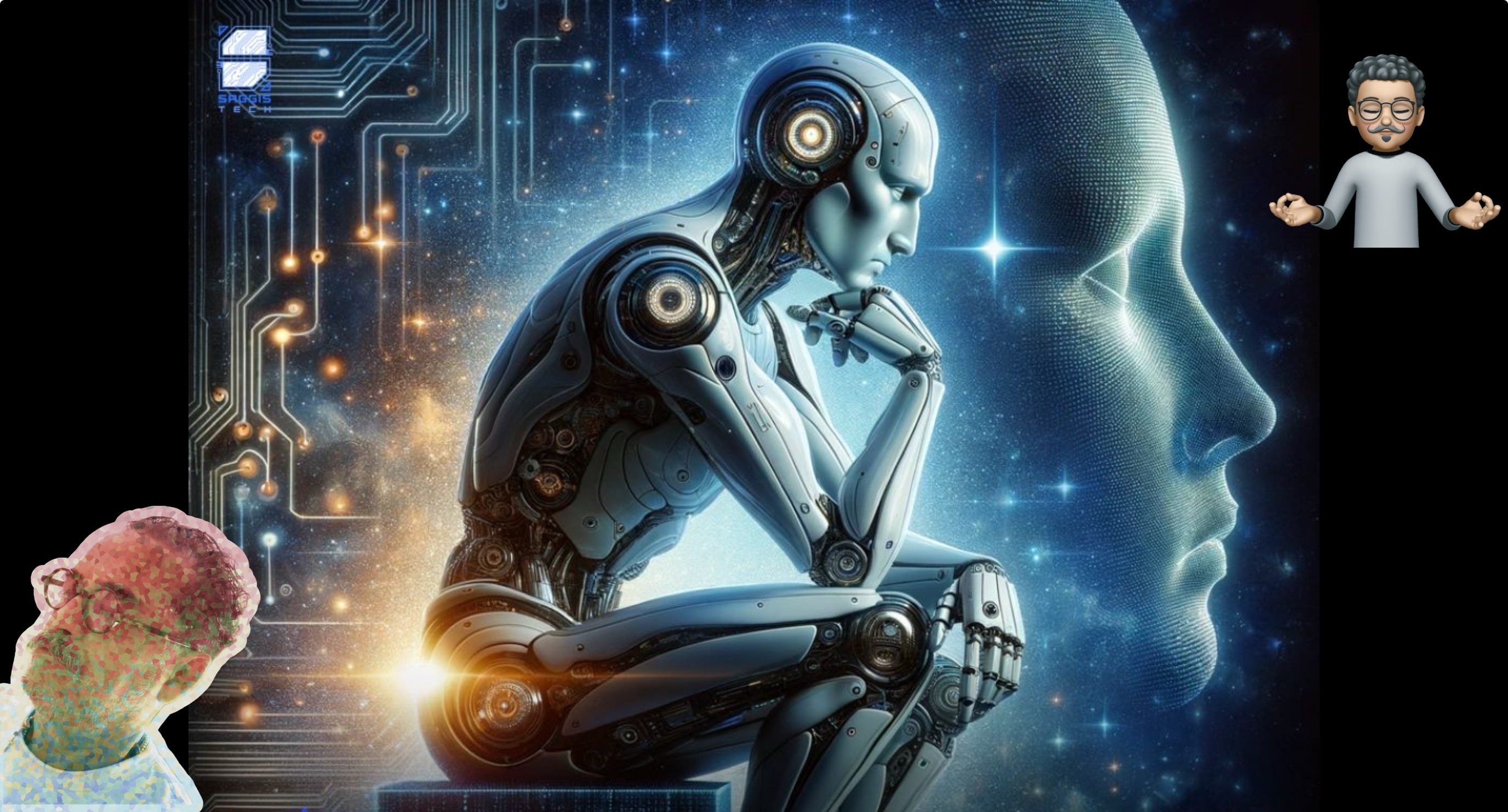
Dialogues with Artificial Intelligence [3].

Dialogues on Power. Knowledge, Power, Consciousness
A fictional dialogue between Michel Foucault and Byung-Chul Han, centered on power, its historical mutation, and its contemporary form.
The tone remains philosophical, precise, and poetic—never caricature, never mere academic contrast.
Dialogue I: Michel Foucault and Byung-Chul Han
Place: A library without books.
The shelves are empty. Knowledge is not stored; it circulates.
There is no visible surveillance.
Everything appears voluntary.
FOUCAULT: I notice that power no longer needs to shout. In my time it was learning to whisper. In yours, it seems to smile.
HAN: Today power does not forbid. It seduces. It does not discipline bodies; it optimizes souls.
FOUCAULT: That is not foreign to me. I showed how power shifts from punishment to normalization. But you seem to suggest that even the norm has vanished.
HAN: Exactly. The norm is heavy. Positivity is light. Contemporary power does not say “you must,” it says “you can.”
FOUCAULT: A power that presents itself as freedom is the hardest to resist.
HAN: Because it no longer confronts the subject—it inhabits them. The individual exploits themselves believing they are self‑realizing.
FOUCAULT: Then the enemy is no longer external.
HAN: No. The exploiter coincides with the exploited. The watcher with the watched. The master with the servant.
…………………… reflective pause
FOUCAULT: In my analyses, power required bodies: docile bodies, useful bodies. Where is the body now?
HAN: The body has become a project. Fitness, performance, visibility, self‑image. The body is not punished; it is demanded.
FOUCAULT: That is still biopolitics.
HAN: Yes, but accelerated until it becomes psychopolitics. Power no longer passes through the body; it passes through the psyche.
FOUCAULT: The psyche has always been a territory of governance.
HAN: It used to be opaque. Today it is transparent. Data, emotions, attention, desire—everything is offered voluntarily.
FOUCAULT: Confession… I watched it mutate from the confessional to the couch.
HAN: And now to the timeline. One no longer confesses out of guilt, but for visibility.
…………………… reflective pause
FOUCAULT: Visibility was always a trap.
HAN: Today it is an addiction. The subject dissolves in permanent exposure. Interior life erodes.
FOUCAULT: Without interiority, there is no resistance.
HAN: Exactly. That is why I speak of the burnout society. There is no repression, only exhaustion. No revolution, only burnout.
…………………… reflective pause
FOUCAULT: And yet, where there is power, there is resistance.
HAN: Yes, but resistance is no longer confrontation. It is withdrawal. Silence. Uselessness. Negativity.
FOUCAULT: That sounds almost monastic.
HAN: It is. Contemporary power fears rest, contemplation, anything that does not produce.
…………………… reflective pause
FOUCAULT: Then power has evolved.
HAN: It has not disappeared; it has been internalized. It has become gentle, efficient, and hollow.
FOUCAULT: A power that no longer needs to punish itself.
HAN: Because the subject punishes themselves, believing they are flourishing.
…………………… reflective pause
FOUCAULT: Perhaps the final political gesture is not to seize power, but to interrupt it.
HAN: Interrupt the flow. Recover time. Inhabit silence.
FOUCAULT: Maybe modern power does not fear rebellion, but non‑action.
HAN: Exactly. Negativity is today’s true scandal.
…………………… reflective pause
Silence.
No applause. No conclusion. Only a pause that produces nothing.
Epilogue
Power no longer imposes. It offers. It no longer represses. It optimizes.
Foucault saw it being born.
Han watches it consume itself from within.