Field Theory [1]

Field theory is one of the most powerful conceptual frameworks for understanding how the world around you functions.
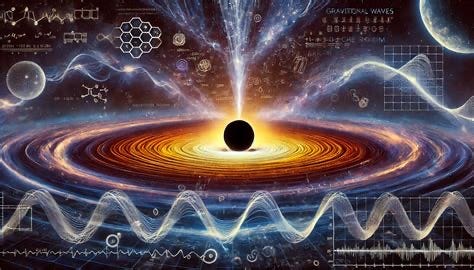
Through it, you can explain phenomena ranging from your cellphone, wireless headphones, time, light, and the GPS you use every day, to deeper processes such as gravity, the properties of water, the way your brain constructs models of reality, and even the physiological foundations of consciousness.
Field theory provides a unified framework: interactions do not occur through direct contact between isolated objects, but through dynamic structures that fill space-time and transmit energy and information.
Field theory can be read as a profound reconfiguration of how we understand physical reality. It is not merely a new mathematical tool, but an ontological shift. Physics ceases to describe the world as a collection of objects exerting forces on one another at a distance and instead conceives it as a continuous fabric of properties distributed across space and time. This conceptual transition — which matures in the nineteenth century — establishes the language in which much of modern physics will be formulated.
Experimental Origins: Lines of Force.
The starting point lies in the work of Michael Faraday, driven by a fundamentally physical question: how are electrical and magnetic influences transmitted?
Prior to his work, the dominant view was action at a distance: charges appeared to influence one another without mediation. Faraday regarded this explanation as physically incomplete.
His experiments revealed that around magnets and electric charges there exists an organized spatial structure. He introduced the concept of lines of force, not as a mere visual metaphor, but as a description of physical reality: the surrounding space possesses an organization that guides the motion of other particles. Interaction does not occur “through empty space,” but through an active structure of space itself.
The crucial insight is that space is not a passive stage. It possesses physical properties that participate in dynamics. Although Faraday lacked a full mathematical formalism, his idea contained the germ of the field concept: a distributed entity that mediates interaction.
Mathematical Formalization: The Field as a Physical Entity
Decades later, James Clerk Maxwell translated Faraday’s geometric intuition into a precise system of equations.
In modern terms, a field is a physical quantity defined at every point in space and time. The electric and magnetic fields assign vectors to each point in space, describing how physical influences are locally organized.
When we say a field “assigns a vector to each point,” what exists between those points?
The short answer is: there is no “between” in the physical sense.
A field, as introduced by Maxwell based on Faraday’s experimental insights, is modeled as a continuous function defined over space-time. It is not composed of separated points like beads on a necklace; rather, it is a gapless distribution.
The notion of “points” is a mathematical idealization. Space is modeled as a continuum. Between any two points there are infinitely many others, and the field has a defined value at all of them. There are no empty regions to be filled — only continuous variation of the field’s state.
A useful (though imperfect) analogy is temperature in a room. We say each point has a temperature, but we do not imagine gaps between discrete temperatures. Temperature forms a continuous scalar field, varying smoothly from place to place. The electric or magnetic field functions analogously, except that it assigns vectors instead of numbers.
From a more physical standpoint:
The “vector at each point” is not a tiny object floating in space; it is simply a way of describing the local state of the field. Space is not filled with discrete arrows — those arrows are visual representations of a continuous magnitude.
Conceptually, what exists between “vector points” is simply the field itself, defined without interruption. The separation into points belongs to mathematical language, not to an underlying granular structure.
If we descend to deeper theories — such as quantum field theory — classical continuity becomes more subtle: fluctuations appear, measurement scales matter, and physical limits emerge. Yet even there, the fundamental formalism still describes fields as continuous entities, not mosaics with empty gaps between values.
In summary, the question arises from imagining a field as a discrete collection of vectors. It is more accurate to conceive it as a continuous geometry of physical states, where the notion of “between” loses independent physical meaning.
Maxwell’s equations show that electric and magnetic fields are not independent: they generate one another, respond to charges and currents, and can propagate as self-sustaining disturbances. The conceptual result is extraordinary: electricity and magnetism are manifestations of a single dynamic structure — the electromagnetic field — and light emerges as a wave of that field.
What had once been a separate optical phenomenon becomes integrated into a unified architecture.
A decisive idea appears here: propagation occurs at finite speed and locally. There is no instantaneous transmission of influence; what moves is a form — a reorganization of the field.
What a Field Physically Means
Imagine a drop of water that appears to move up and down but does not actually change position. It oscillates — as if rotating about itself — producing a wave-like fluctuation that gives the impression of expansion in all directions.
Something similar happens with a wave in the ocean: it appears to advance forward, but the water does not travel with the wave. What truly moves is the form of the wave — the pattern of motion. Each drop merely oscillates around its original position, transmitting energy without undergoing large-scale displacement.
Now extend this image.
Imagine we are no longer speaking of water, but of something more subtle: a field.
For Faraday, a field was not a material object that could be directly seen, but a region of space where a real influence exists — electrical or magnetic. It is not the object that “throws” a force across distance; rather, it modifies the space around it.
Maxwell expressed this mathematically: the field is a continuous physical entity capable of oscillating, propagating, and transporting energy.
Just as in a water wave matter does not advance but the pattern does, in an electromagnetic field classical particles do not travel from one point to another; instead, an energetic disturbance of the field propagates. It is the pattern of the field that moves.
Thus, a field may be imagined as an invisible ocean filling space. When a disturbance occurs — for example, an accelerating charge — that “ocean” does not move as a solid block; it oscillates locally. That oscillation propagates as a wave: what advances is the structure of the pattern, not a substance traveling continuously from origin to destination.
In summary: just as a wave is not the bulk displacement of water but the propagation of form, a field is a dynamic structure of space whose configuration can change, vibrate, and propagate, transporting energy and information without requiring material transfer from one location to another.
Ontological Shift
This transformation reorganizes physical ontology:
Before: objects → forces → action at a distance
After: fields → local dynamics → emergent interaction
Particles are no longer isolated entities exchanging instantaneous forces. They are interpreted as sources, singularities, or excitations within a continuous field. This perspective prepares the ground for later developments — relativity and quantum field theory — in which the field becomes even more fundamental.
Why It Was Revolutionary
Field theory introduces three structural principles:
1. Distributed reality: physical properties extend throughout space rather than being confined to material points.
2. Local causality: every influence propagates through continuous evolution.
3. Field energy: the field stores energy and momentum; it is not merely a mediator but a substantive component of the physical system.
To interact, from this perspective, is to reorganize the configuration of the field.
A Deeper Conceptual Reading
The image of reality shifts from a collection of objects to a network of distributed processes. Matter can be understood as relatively stable configurations of fields; interaction as the propagation of structure.
This vision not only reorganizes classical physics but establishes the conceptual framework from which the twentieth century explores relativity, field quantization, and the fundamental structure of nature.
Field theory does not merely describe phenomena — it redefines what it means for something to exist physically. The focus shifts from isolated entities to dynamic patterns unfolding within continuous space-time.
The Universe Transports Structure, Energy, and Information
A field is not simply a mathematical description of what happens. It is the physical medium through which the universe stores, transforms, and propagates structure.
This can be understood at three interconnected levels: physical, informational, and philosophical.
1) Fields as Physical Carriers of Information
In physics, a field is a quantity defined at every point in space-time. A paradigmatic example is the electromagnetic field formulated by Maxwell from Faraday’s experimental insights.
When we say a field carries information, we do not mean semantic information, but propagable physical structure. What is transmitted is a local variation of the field — its spatial correlations and dynamic patterns.
If an accelerating charge produces a disturbance in the electromagnetic field, what travels outward is not the charge itself but physical information about its state.
In this sense: Information is the form of change of the field.
There is no instantaneous action at a distance. Every effect occurs because the field transports local variations at finite speed. Causality is encoded in the field’s dynamics.
2) Information, Energy, and Dynamics
In field theory, energy and information are inseparable.
A field stores energy, transports momentum, and organizes physical states. A wave is not merely “information traveling”; it is structured energy.
No physically effective information exists without energetic support.
Each field pattern corresponds to a specific energetic configuration. Changing the field requires energy; propagating a signal redistributes energy across space-time.
The relationship can be summarized as: Field structure ↔ energy ↔ physical information
Information is not an abstract addition; it is the dynamic configuration of the system.
3) Fields and Space-Time
With Albert Einstein, a decisive conceptual step occurs: space-time itself acquires the character of a dynamic field.
In general relativity, gravity is not a force but the geometry of space-time. Matter-energy tells space-time how to curve, and that curvature guides the motion of matter.
Space-time ceases to be a passive stage and becomes a physical actor.
Fields exist in space-time — and space-time itself is a field. Gravitational information, such as curvature or gravitational waves, propagates as geometric structure.
Philosophical Implications
A) Ontology of processes
The world is no longer described as isolated objects interacting, but as distributed dynamic patterns. “Things” are relatively stable field configurations. Reality is closer to flow than to substance.
B) Local causality
Every influence occurs through continuous propagation. To change something is to reorganize fields.
C) Information as physical structure
Information is not merely human description; it is material organization of the field.
D) Conceptual unity
Matter, energy, information, and geometry cease to be separate categories:
• matter → excitations of fields
• energy → measure of configuration
• information → pattern of configuration
• space-time → dynamic structure that contains and participates
The classical distinction between “content” and “medium” dissolves.
Conceptual Synthesis
From this perspective: A field is the fundamental medium through which the universe stores, transforms, and propagates structure. What we call interaction is the redistribution of energy, the propagation of information, and the geometric reorganization of a dynamic space-time continuum.
In modern physics, reality is understood as information energetically embodied in fields.