Which is More Complex: the Brain or the Universe?

Author: Prof. Eng. Carlos Serna II, PE MS LSSBB
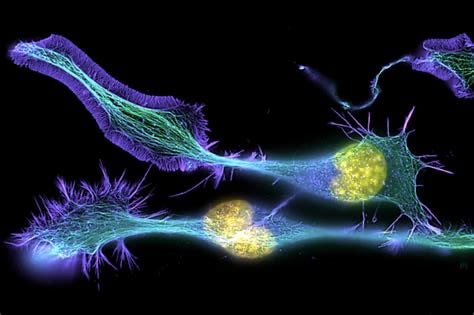
The human brain and the universe are two of the most intricate systems we know, each governed by its own organizational rules and evolutionary dynamics. Both seem to strive for an optimal and highly coherent state of complexity, oscillating between order and chaos in a continuous dance.
On one hand, the universe is composed of dark matter, dark energy, stars, and galaxy clusters, which define the cosmos’ informational budget and shape its evolutionary processes across different scales and domains. On the other hand, the human brain is structured through neurons, glial cells, synaptic plasticity, and neurotransmitters, which grant it the ability to generate meaning and adapt its functioning based on experience.
Despite their vast difference in scale, both the brain and the universe appear to share common organizational principles. The brain extracts meaning from sensory data by reducing entropy, while the universe, despite an overall increase in entropy, exhibits localized pockets of order—such as clusters and galactic filaments—that facilitate greater structural complexity. The key question here is whether increasing complexity is a universal trend or merely a localized phenomenon at certain scales.
The Dynamics of Complexity: Brain vs. Universe. In the brain, complexity continuously evolves through neuronal plasticity and learning. The ability to reorganize its connections and adapt its structure to new experiences allows it to integrate information without becoming overly rigid or chaotic. The universe, though operating on much longer timescales, also continues generating new “local orders” through the formation of stars, galaxies, and cosmic structures that emerge within a background of increasing entropy.
From the perspective of information theory, Shannon entropy measures the uncertainty within a message. The brain, in its constant interaction with reality, seeks a balance between order and chaos: it extracts meaningful data and integrates it with internal models previously shaped by experience while maintaining enough flexibility to process new information. Excessive order would limit the flow of information, whereas too much chaos would dissolve meaningful signals, leaving only noise. Within this delicate balance, the brain remains in an optimal state of adaptation.
Similarly, the cosmic network can be interpreted in terms of entropy and information flow. Despite the universe’s overall expansion and increasing global entropy, local structures of high complexity still emerge. The dense connectivity of neural circuits in the brain follows a similar logic: while the system as a whole generates noise and consumes energy, certain regions maintain highly ordered processes. Neural integration centers consolidate information, while peripheral areas promote diversity and flexibility in processing.
Structure and Modeling: Brain and Universe. Unlike the brain, the universe does not have conscious states, yet the way information evolves and interactions occur between galaxy clusters, dark matter, and cosmic expansion follows patterns that can be compared to neuronal organization mechanisms. In the brain, learning and memory generate local order through synaptic consolidation, but they also produce external entropy in the form of heat and metabolic byproducts. Similarly, in the universe, processes that lead to the formation of new cosmic structures also involve energy dissipation and an overall increase in entropy.
The study of both the brain and the universe has advanced in parallel, thanks to tools and methods that, although applied at different scales, share fundamental principles. High-resolution imaging techniques have opened pathways for exploring both systems. In neuroscience, magnetic resonance imaging (MRI), electron microscopy, and diffusion technology scans allow us to visualize the detailed structure of neurons, axons, and synapses, mapping how different regions are densely or sparsely connected. In astronomy, telescopes spanning the electromagnetic spectrum—from X-rays to radio waves—track the distribution of galaxies and the intricate composition of galaxy clusters, revealing the structure of the cosmic web.
Whether observing small neural circuits or vast galaxy clusters, the approach remains similar: we first capture images and map the structures, and then build theoretical models to conduct simulations and understand their behavior. This parallelism suggests that the complexity of both the brain and the universe can be understood through shared principles of organization, allowing us to imagine new ways to investigate the nature of reality.
Conclusion: Which is More Complex?. Comparing the complexity of the brain and the universe is not a straightforward task, as the measure of complexity depends on the criteria used. If we consider the sheer number of elements and scale, the universe would appear to be the more complex system. However, if we analyze the density of connections and the capacity for information processing, the human brain might surpass even the vastness of the cosmos. What is fascinating is that both systems operate within a framework of self-organization and continuous evolution, where information is structured to give rise to new forms of order. Whether in neuronal synapses or galactic clusters, complexity emerges from the dynamic interaction between elements, shaping reality as we perceive it.